The Inner World of the Immigrant child
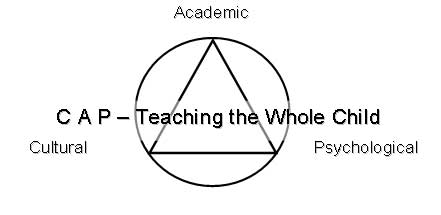
Dr. Cristina Igoa Introduction Let me begin with the words of two immigrant children. First, a child from Afghanistan: I felt hidden in the second grade because whenever anyone said something to me, I just couldn't answer a thing.� When it was time for recess, I didn't have anyone to play with.� The only person who played with me was my imagination. And from another child: I felt very lonely when I first came here from the Philippines.� When I went to my new school, no one talked to me.� It was like I didn't exist. I want to tell you about the series of events that brought me to an understanding of the inner world of the immigrant child. I want to tell you what started me on the road to the needs of immigrant children and I have found a teacher can ease the shock of the uprooting experience and awaken the power within the children to help themselves and become empowered to make it in school. I want to tell you how mastery of art skills, story-telling, and second language literacy, combined with cultural, psychological, and academic teacher interventions, can lead to a wealth of positive behaviors, a happier acculturation process, and success in school. I myself was an immigrant child, and I have worked with hundreds of immigrant children.� So the immigrant child's unique perspective is well known to me.� There is nothing more painful for a child than the feeling of non-existence.� Immigrant children’s search for expression and their feelings of loneliness and isolation create a barrier to learning and acculturation, and often result in a loss of self-confidence, a loss of self-expression, a loss of self-esteem… a loss of self. Designing the center I want to tell you a little bit about the design of the classroom at the Center, for the children themselves helped me see how it could be made into a nest, a place each could feel welcome and secure and at home. Each student’s response and behavior in the classroom is the result of the complex interaction of his or her cultural background, individual nature, and the length of time the child has been in the host country.� When I speak of a group of children behaving in a certain way, my intentions are not to stereotype but to present what I have observed. When the children entered the Center the first day, I noticed where each instinctively gravitated.� Dennis favored introversion and chose a corner.� I enclosed this area with a partition and this became the area for silent work, such as listening to stories on cassette, and privacy. When the Filipino and Hispanic students entered the classroom, it was evident by their chatter that they had been in the country for some time, and I arranged their desks in a cluster to accommodate their extroverted nature. When the Samoan children came in, they scoffed at the desks and sat in the far corner of the room.� “Desks, desks, I hate desks.”� So I brought in a large rug and placed in on the very spot where they sat.� Later, I surrounded the area with a tree and some plants to create an “island” that would remind them of their homeland. For these children who seemed so alone, I wanted to find a way to encourage them to come forward and relate to others.� For this, I set up an art table in the middle of the room where children could express themselves non-verbally when they needed a break from the task of learning a second language. A filmstrip-making table set up at the opposite end of the quiet corner served for story writing and held the filmstrip projector for viewing. I also created a place with a table and two chairs where I could have a dialogue with each child one-to-one.� I also provided each child with a box in which to place confidential work or precious objects; this would give each child a sense of ownership and security. What the children had to say as they reflected back This is a totally different environment than I have been used to.� The change is different because it upsets the kind of life I had.� In pulling together the thoughts of the children who reflected back as they their interpreted their filmstrips, I made a composite of their quotes, to give them voice. This is what they had to say about their first encounter in a new country shortly after being uprooted from their homelands Some of the wisdom the children offered � Be patient and be hopeful, says one child.� If a teacher gives up, so will the child.� Explain that even though a student made mistakes, it doesn’t mean he can’t do it; it’s going to take some time to learn the process. � Try to understand the background of the individual students.� Because each country teaches the students to act in certain ways. � Talk, just talk with the student.� Get them to talk to you.� Not just everyday conversation, but what they feel inside.� It’s hard for immigrant kids, because they don’t trust. In their silence, immigrant children may be upset or angry.� Try to get it out of them. � Remember that the teacher is the person who the student is going to look up to in school, and the kid is in school most of the time.� You learn a lot from school, not just study, or work, but about life.� The person who’s going to guide the student helps the student develop good personality, insight of who the kid is. � Try to understand how it feels to be an immigrant child and go slow, don’t rush them. Help them be successful by giving them things they can do, and not things that they cannot do. � Help immigrant children feel part of a group.� They will feel more secure if they have someone to talk to. From practice comes theory, and from these feelings and messages, it became clear to me that intervention is important.� I formulated a theory of interventions for the whole child: cultural, academic, and psychological. In a homogenous society, we deal with the academic... because it is assumed that everybody’s culture is already visible.� But for the immigrant child, the teacher must deal with the whole person.� The visibility of their culture is important. They need to resolve the feelings being uprooted.� Then, if they feel safe, and they feel in harmony with all three aspects of self, the children can feel “fully alive” in school and become ready to take on the challenges of the acculturation process as well as second language literacy. The CAP intervention Intervention with immigrant children is then compound of three aspects: Cultural (C), Psychological (P) and Academic (A), CAP It is not easy to find the balance between the three aspects of the CAP intervention.� But once I know the culture and the psychology, it lays the foundation for the academic and points the way. So, in pulling together all these thoughts and messages of these children, it was a challenge then for me to take the feelings and try to create pedagogy that would ease the conflicts.� Now that I had all this honesty and this truth from the children, what should I do as a teacher?� What could I do with what I learned about the integration of a child, who was once chased by imaginary wolves and tigers, and the cultural conflict experienced by another, the “little egg?”� What strategies could I develop to avert the potential for an outcome like that of an immigrant child, the “lonely bear?” And thus I became ready to change my teaching, to re-think the way in which I looked at the immigrant child, and look at it more from the perspective of the whole child.� I took what I had learned from the children at the Center to my next assignment with immigrant children, in a self-contained all-day classroom. Later, as I met each child in one-to-one dialogue, I asked myself questions whose answers might reveal the need for cultural, academic, and psychological interventions.� Some of these questions were: � How does the child feel about his or her country? � How does he or she feel about leaving the homeland? � What can be done to maintain his or her language? � How does the child feel about school? � Does the child have friends? � What is the child’s academic background?� I knew it would be a difficult thing to maintain the balance between the cultural, the academic, and the psychological. �For the purposes of this discussion, I will speak of each type of intervention in its own category.� But you must keep in mind that in practice, you may need to focus on one side or another, depending on the child’s needs, but always keeping the academic clearly in focus so the child understands its importance in school. Cultural interventions began with validating each child’s culture from the very first day.� I asked each child to show on a map where he or she had been born, and asked a representative from each country to come up to the front of the room and speak their native language.� As each spoke a sentence or two, we listened for the differences in sounds and then created our own language.� Vale ban toi.� Musta ka bine.� Si, bien.� This translated to “Good morning, I hope you have a nice day,” in a combination of seven languages. Validating each child’s culture and embracing multiculturalism Once I had completed dialogues with each student and had read up on each child’s cultural heritage, we prepared for a celebration.� We set a day for the students to bring their native food, music, and costumes, and we invited those who had learned cultural dances to add to the festivities.� We worked on drawings of flags, foods, and costumes, and integrated lessons in reading and writing with awareness of each child’s cultural history. They then put it all together in reports about their countries. The classroom became a place that embraced multiculturalism.� In this sense we created own culture, one in which everyone belonged yet valued his or her cultural differences.� I encouraged the children to personalize their desks with symbols and objects that reflect their identities.� I asked them to teach each other the games they had played in their native countries. To nurture the home and school connection I also had each child take turns bringing home a tape recorder to capture the sounds of their cultures—their languages and music.� Engaging the families in this project was yet another way of validating their culture and giving each child a connection between home culture and school culture.� So I mediated and sought the participation of the parents in their children’s education, and spoke to them of the importance of valuing and preserving their cultural traditions in order to heal the cultural split.� I visited their homes if invited, and asked them to come into the classroom. Part of sharing their cultural traditions included religious matters, as religious symbols and the importance of religion often came up in their drawings and writings.� By allowing children to talk about how they practiced religion, it became another way for backgrounds to be shared and compared, helping each child become respectful of another’s religious beliefs. Psychological interventionNext, I would like to speak about psychological interventions to help the immigrant child integrate his or her inner world with the world of the classroom. From the first day, I set the stage.� I portrayed the coming year as a long uphill journey together, a mountain climbing adventure in which we were invisibly linked to one another.� As some got closer to the top, they would reach down to help others.� We would look out for each other and if someone slipped, someone else would throw out a rope. I also taught the children the meaning of the Spanish expression, “Mi casa es tu casa,” and how it is a way of inviting people to feel at home, to be themselves while respecting other’s needs to be at home as well.� This message also conveyed that the classroom was a serious place for learning.� We discussed what it means to be a teacher and what it means to be a student, and how each child could take responsibility for his or her own learning. Creating a nestI constantly searched for ways to make the classroom a nest, a safe place in which the children could incubate and feel free to express themselves without fear of being laughed at or being given work they could not handle. I met with each child individually to engage them in dialogue so I could find a way of connecting with each child as a unique individual, validating the child’s cultural history, and establishing a trusting, respectful and warm relationship.� As I listened, I became of aware of areas for intervention and saw that just a simple word or two could transform a child’s attitude and help unblock his or her potential for academic success.� If a child was in the silent stage and not ready to talk to me, I entered the silent stage with them by respecting the child and waiting.� We still spent time together quietly to establish trust and warmth.� I spoke directly to the child and tried to find out what I could do to make it safe for the child to speak to me. Dialogic intervention Dialogic intervention, a concept of listening to what a child is saying and mediating in a positive way when a child reveals a negative self-perception.� For example, if a child says, “I can’t read,” the teacher can say “You just read that word.”� If a child says, “I am afraid to learn English because I might forget my language,” the teacher can say “And you are capable of learning two.”� This strategy brings a child toward understanding that there are two sides to a coin: where one sees only the negative aspect of a situation, the positive is always present and waiting to be tapped.� Given room to “breathe,” the children become more willing to take new steps, knowing they need not fear ridicule or admonition.� Soon, the children themselves intervene with each other.� A child says, “My drawing is is no good,” and another child says “I like it, it is pretty.” Academic intervention I think you must be beginning to see how interlacing cultural and psychological interventions can help the child deal with his or her inner world. And in identifying the fears and anxieties that block learning and getting over the emotional hurdle of accepting the new culture without rejecting his or her native culture, it becomes easier to reach and teach the child. For example, once the children told me everything they wanted to tell me about who they are and their countries’ histories, they became eager and curious to know about the new country and the history of America.� They had come to feel they were truly part of American history in the making. They are ready to embrace new learning. However, there is still a need for academic intervention.� Because of the high rate of mobility and the variety of cultures, their ability to make it in school - for that is what they really want and need - can depend up the teacher as researcher. I prepared for academic intervention with research, and collected the data into a graph.� In particular, I tried to identify academic gaps. Some of the questions I researched were: � Were the children schooled or unschooled before they came to this country? � Was their education fragmented? � What has been the child’s experience thus far in the American school system? � What is the status of the parents? To gather this information, I met with the children individually, and in small groups, and with their parents, and we filled in the information together.� With the data, I was able to identify and then address some of the sources of academic underachievement for each child.� Some of these included: � Educational gaps due to fragmentation and mobility (in this country as well as pre-immigration this country). � Previous teaching that used a “blank slate approach.” � Teacher misinterpretations of the child’s attitude, such as mistaking the silent stage for obstinance or inability to understand. Once I found where the academic interventions were required, I adjusted my teaching approach and the curriculum to fit individual needs, emphasizing coverage from ground up to close the gaps. Initially, the emphasis is on literacy.� Once the children learned to read in any language, they were able to access the English material faster.� This gave them access to the core curriculum, whereas learning to speak and write may require daily practice for exposure to Western sounds and characters. From what I had discovered in my research, I was able to give each child a chance to go through the same steps the mainstream kids had gone through.� I worked with each child to determine the highest grade in which he or she could read with at least 90% success, and then I took all the skills a child would normally master in that grade and made sure the child could master them alone or in study groups.� I gradually moved every child up the grades.� In this class, it took approximately two months to cover each grade level for each child. Bridging the gaps I also developed each child’s sense of self-responsibility for learning with study groups, home libraries, and the buddy system. Study groups I found that I could simultaneously assist with peer bonding and help the students learn by setting up after-school study groups.� First I taught them how to study with each other in the classroom.�� Then, from y dialogues and some additional research, I determine which children could best study together based on where they lived or if they themselves volunteered to work with each other. Each study group was given responsibility to obtain assignments, arrange for study session, and see that members of the group came to class prepared. Home libraries As I mentioned earlier, my classroom had no books.� However, by spreading the word and working with corporate educators who worked together materials from churches, closed schools and other donors, we eventually gathered several carloads full of books.� After I went through the books to determine which ones I would need in the classroom, I had an abundance supply left over.� These I encouraged the children to take home to create their own home libraries.� Whether or not they could read the books yet was not as important as the idea of establishing an interconnected relationship between school and home, and validation of the idea that a home library was source of pleasure and something to show the parents. Buddy system Another strategy I used for academic intervention was the buddy system, which I� based on the strengths of the cultural concept of “older one,” which is embedded in so many cultures, where the concept of shared responsibility facilitates parenting.� Much in the same way as the “big brother” and “big sister” help their families, I asked the older ones in the classroom and those who had always been successful academically to keep the younger ones under their wings.� This they did by checking homework notebooks, checking to see that children were on task, and being available to assist when needed.� When the responsibility for learning is delegated, everyone is involved in the energy it takes to learn. Follow-up study of academic achievement I want to tell you about a follow-up study I made of the children in my first self-contained, all day classroom.� That next year, at the end of the first quarter, I contacted 14 of the students who had been promoted to the 7th grade from my classroom, all in the same school.� They were energetic and alive in their new school and told me with exuberance of their grade point averages, which were all above average or outstanding, with six of 14 achieving the top possible grade point average of 4.0. Just as children were alive at the Center, and felt their cultural, academic and psychological strength, these children were all making it. Leraning art as a second language Every year I paint a new picture.� Some years the children come with stronger academic skills than other years.� Now I would like to tell you about what happened in a classroom of in which the students on their arrival were strong neither in English nor in their primary languages. While I had always included as much art as time permitted in my previous classrooms, I formally used art in this particular classroom as a structure to enhance academic skills and literacy.� Art is a vibrant second language that puts all the children on a common ground and helps them build the confidence they need to succeed in school, and challenges their blocked energies.� I have found that art lets children communicate in more expressive and expansive ways than their oral and written language skills allow, and I can find out what the children have to say through their drawings and paintings. To explain the process that brought me to try this approach, I will describe that 6th-grade classroom at the beginning of last year � There were 31 children and eight different cultures and languages.� � I could sense the depressing quality of life in the room - the feelings of helplessness and despair. � From the quality of the work that some of the students had turned in, most of them seemed to have given up ever making it in school.� I read the teachers’ comments about the children that had been sent to me. � fights, angry, attitude problems � needs a lot of support in doing assignments � “spacey;” does not do assignments � class clown These were the children’s negative ways of expressing their academic frustration and lack of visibility.� So with these obstacles in mind, I adjusted the curriculum to give art a significant standing in my classroom. I started by counting the required number of hours for teaching art for the entire school year.� Then I put the hours into solid blocks of time so the children could be immersed in the subject.� In the children’s eyes, this gave art a more credible standing in academia. Homework regularly included art assignments to draw things from their living rooms, kitchens, and gardens, and the classroom.� As the children progressed, I reduced the amount of time for direct instruction. There was no sacrifice of standards.� The children began to rise to a high expectation level when they got the idea that only thoughtful and careful work would be accepted. I recognized the need for a sense of timing, such as when to take art into the corridors to make the children visible to the wider community. I found that art as a second language gave the children a bridge to communicate over a language gap.� It also gave them practice and understanding of many skills that transferred to all the other academic subjects.� For example, in art they learned: � attention to detail and patience � how to focus and concentrate, to observe and compare � how to break big tasks into small steps � hand-eye coordination to “draw” alphabet characters Art also gave them a framework to sharpen their imaginations and identify their thoughts and feelings, and this made it easier for them to articulate themselves in speech and writing. The academic achievements of this group of children are expressed in greater detail in a chapter I recently contributed to a book on the invisible children in our schools and society.� Art broke their sense of isolation and channeled their energies, and as their commitment grew, their work habits changed dramatically.� The focus on art engaged them totally. There was no end to their creativity.� � They enhanced their science reports and history reports with art. � They created toys and painted school murals. � Children from neighboring classrooms stopped by to introduce themselves and having these other kids enter immigrant territory, instead of it being the other way around, de-mystified the differences for both groups. Psychological The immigrant children felt their strength, and through their artistic accomplishments, they became more visible to each other and respected in the world outside the classroom. Once they have gained the mechanical skills, the children have a framework for communication and in the expression of imagination, they reveal themselves totally - culturally, intellectually and psychologically.� I want to show you some overheads of this classroom’s artwork. I spoke earlier of their lackadaisical attitude because they felt so bad about school.� These overheads show the difference art made in one boy’s approach between the beginning of the school year and six months later.� The attention to detail is significant and transfers over to academic subjects. I mentioned the loss of cultural identity and how the children began to make themselves visible through their artwork.� We used art to let them own and celebrate their differences, and they drew patterns and symbols of their cultures and we put all the drawing in a circle and without judging them, we applauded those differences. Religion, so deeply embedded in culture, is often integrated in the art of the children who want the whole of who they are to be visible to the world.� The children from Mexico often draw pictures of the Virgin of Guadeloupe as representative of their culture.� The children from Afghanistan draw the mullah, or priest, in front of a mosque.� The children from the Philippines often draw a church, steeples and the cross - symbols of Christianity. Closing reflections Through art, the immigrant children could communicate their entire selves to the world around them, and the vitality level of the room was transformed.� Finally, the children of this classroom were both seen and heard. I have kept up with the students of the follow-up study through the years, and they have made it to colleges and universities. Like Dennis, they are fully alive. It has been an honor to share with you the voices and the inner worlds of the immigrant children.� Thank you. Thoughts for Teachers of Immigrant ChildrenEncourage friendships... Guide and provide time for them to form; discuss what characteristics make for genuine friendship. Teach children how to be inclusive of others.� Teach them the meaning of community. Bring out the children’s inner world... Use storytelling, art, and personal experiences to help each child deal with fears and anxieties that block learning and energy. Show them how to participate in the new society without losing important cultural values... �Let the children feel comfortable speaking their own languages without negating the need to master the English language. Support the parents... Include them in the education and acculturation process and help them help their children to preserve their culture.� If the school values the child’s original culture, the child will value it at home, too. Celebrate multiculturalism... Let children bring their native clothing to school; recognize it not as costumes, but as natural living symbols of their origins.� Let them enjoy the sounds of the languages of the other children. Emphasize second language literacy... If children can read, they have access to the rest of the curriculum; when they cannot read, they feel disempowered.� Research the academic gaps and meet the children along the road to literacy wherever you may find them. Respect the cultural and psychological aspects of the child’s self...� They point and clear the way for academic intervention and academic achievement. The Children’s Messages to the Teachers Have patience.� If the teacher feels there is no hope in an immigrant child, then the child will think, “Well, if the teacher who’s helping me thinks that I can’t go anywhere, then I might as well give up myself.”� Because all he thinks is the teacher is the closest friend, in a way, that he knows, and now the teacher even gets tired of helping him or her, then this person will give up. I think schools should encourage students to try to help the immigrant children as much as they can. I still hear some of my friends saying how they felt when they just came here... left out... and so I think every immigrant [should be made to feel part of the group]. Try to understand the background of the individual students, because each country teaches the student to act in certain ways... somehow try to realize that it’s... a lot different here than in their old country and it’s a whole different environment.� Explain that even though the student is getting a C, it doesn’t mean he can’t do it; it’s going to take time to learn the processes.... It’s the little talks that help [kids] realize that if [kids] put enough into it, you reach that something.� It’s important for them [kids] to know that everybody makes mistakes, because when you first arrive, you get discouraged from your mistakes. You learn a lot from school and in school, not just study, work, and things like that, but about life.� The person who’s going to guide the student helps the student develop a good personality, good insight of who she is... who the kid is. Try to get them to talk to you.� Not just everyday conversation, but what they feel inside.� The teacher is an important person in the child’s life.� The teacher is the person who the student is going to look up to in school.� And the kid is in school most of the time. Stop and help them for a while.� Try to understand how they feel.� Helping me through even though I made so many mistakes - still help me.� Try to listen to them and not rush them.� Help them be successful by giving them things that they can do and not things that they cannot do...� And help them find friends.� Be patient and encourage them. |