5º
ENCUENTRO INTERNACIONAL DE
EDUCACIÓN INICIAL Y PREESCOLAR
25, 26, 27, 28 - MAYO 2005
|
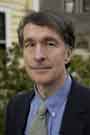
��������������������������������������������������������� Curriculum Vitae Howard Gardner Short Biography Howard Gardner is the John H. and Elisabeth A.
Hobbs Professor of Cognition and Education at the Harvard Graduate
School of Education.� He also holds positions as Adjunct Professor
of Psychology at Harvard University and Senior Director of Harvard
Project Zero. In 2004 he was named an Honorary Professor at East
China Normal University in Shanghai. Among numerous honors, Gardner
received a MacArthur Prize Fellowship in 1981.� In 1990, he was
the first American to receive the University of Louisville’s
Grawemeyer Award in Education and in 2000 he received a Fellowship
from the John S. Guggenheim Memorial Foundation.� He has received
honorary degrees from twenty colleges and universities, including
institutions in The author of over 20 books and several hundred articles, Gardner is best known in educational circles for his theory of multiple intelligences, a critique of the notion that there exists but a single human intelligence that can be assessed by standard psychometric instruments. During the past twenty years, he and colleagues at Project Zero have been working on the design of performance-based assessments, education for understanding, and the use of multiple intelligences to achieve more personalized curriculum, instruction, and assessment. Most recently, Gardner and his colleagues have launched the GoodWork Project. "GoodWork" is work that is both excellent in quality and also exhibits a sense of responsibility with respect to implications and applications. Researchers are examining how individuals who wish to carry out good work succeed in doing so during a time when conditions are changing very quickly, market forces are very powerful, and our sense of time and space is being radically altered by technologies, such as the web. Gardner and colleagues have also begun a study of interdisciplinary institutions and curricula. Gardner’s books have been translated into twenty-five languages. Among his recent books are The Disciplined Mind: Beyond Facts and Standardized Tests, The K-12 Education that Every Child Deserves (Penguin Putnam, 2000) Intelligence Reframed (Basic Books, 2000), Good Work: When Excellence and Ethics Meet (Basic Books, 2001), Changing Minds: The Art and Science of Changing Our Own and Other People’s Minds (Harvard Business School Press, 2004), and Making Good: How Young People Cope with Moral Dilemmas at Work (Harvard University Press, 2004; with Wendy Fischman, Becca Solomon, and Deborah Greenspan). |
 |